What Is Serponar? How B2B Platforms Achieve Stable Rankings
A stable, update-resistant search presence requires a deterministic technical architecture. This analysis outlines the engineering principles behind entity verification and edge caching.

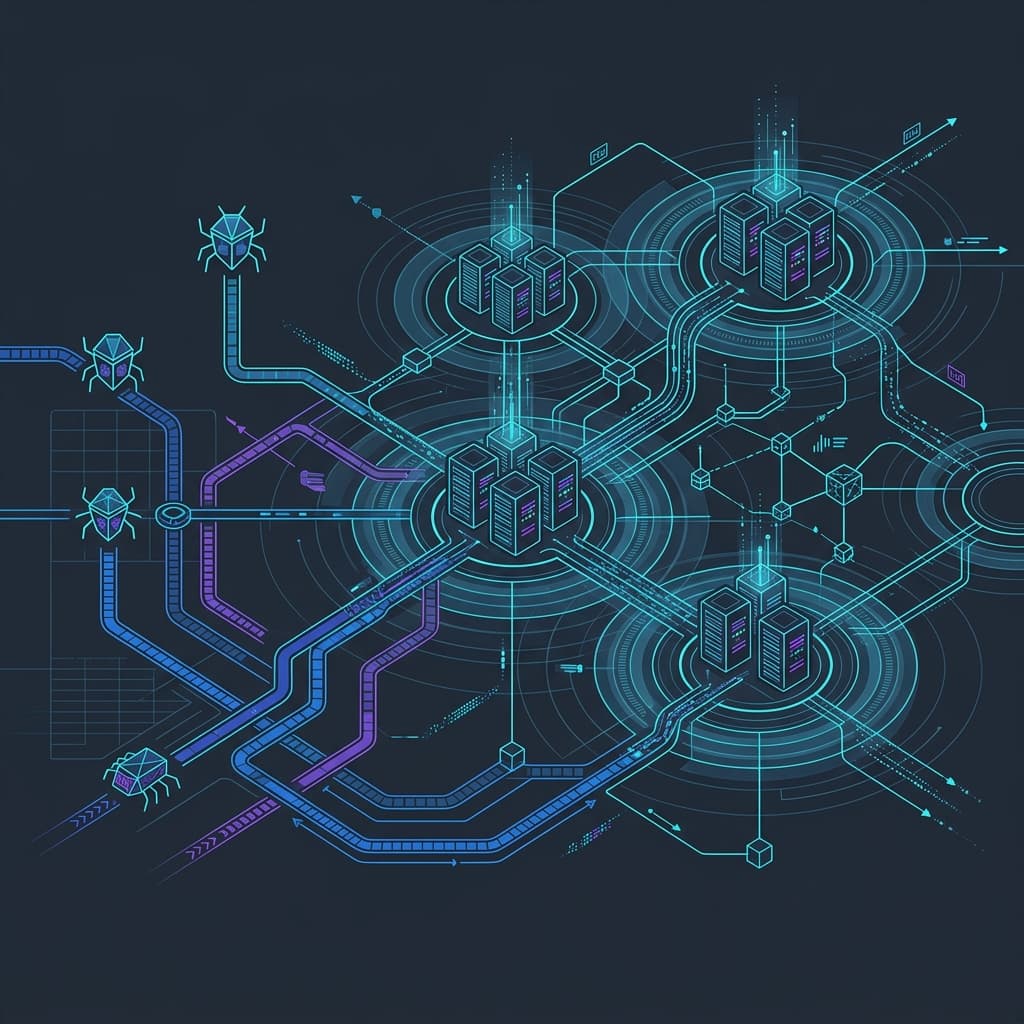
In the field of search engine engineering, B2B platforms often encounter extreme variations in their organic search visibility. This volatile, chaotic state is commonly termed a Serponado. In a Serponado state, rankings shift unpredictably due to crawler conflicts, unoptimised rendering pipelines, and unstable semantic signals. Conversely, a stable, update-resistant organic search configuration is defined as Serponar. Achieving a Serponar state ensures that organic performance remains consistent even during major core algorithm updates. For enterprise organisations, establishing this level of search stability is a business necessity. B2B leaders often consult a digital consultant to evaluate their site architecture. By structuring digital assets deterministically, B2B platforms protect their search visibility from sudden traffic drops, ensuring long-term digital authority and alignment with user expectations.
1. The Science of Update-Resistant Rankings
Traditional search engine optimisation often relies on basic string matching. B2B websites frequently target specific keywords, expecting that keyword density alone will secure high organic positioning. However, modern information retrieval systems have shifted towards semantic entity parsing. Modern search engines do not merely match queries with raw strings on a webpage; instead, they utilise advanced Natural Language Processing (NLP) models to extract and verify distinct entities.
These NLP models build a structured network of concepts, mapping their relationships to verified nodes within a Knowledge Graph. For a B2B platform, this means search engines evaluate your content based on conceptual clarity and entity relationships rather than simple keyword frequency. When an organisation establishes clear semantic links between its brand, its services, and its industry topics, the crawler verifies these relations with high confidence. This verification process is crucial for achieving search stability. String matching is inherently fragile, as minor changes in phrasing or user search behaviour can disrupt rankings. In contrast, semantic entity parsing recognises the underlying meaning, ensuring that your website remains anchored in the search engine's indexing layer even when the algorithm's ranking weights are updated. Consequently, prioritising semantic structure over simple keyword frequency protects B2B platforms from the volatility typical of basic search indexing.
We must understand that modern search engines utilise multi-layered transformer models to parse user intent. These models analyse the co-occurrence of terms to establish semantic proximity. By structuring your technical documentation to reflect these relationships, your platform presents a clear semantic schema that the crawler can parse without ambiguity. This precise conceptual organisation ensures that the search engine identifies your platform as a primary authority node for specific industry concepts, reducing the likelihood of algorithmic ranking drops during core updates.
2. NLP Pipelines and Lexical Lemmatisation
A critical component of semantic search is how natural language processing pipelines handle word variations. Within these NLP pipelines, lexical lemmatisation plays a key role. Lemmatisation is the process of reducing different grammatical forms of a word to its base dictionary form, known as the lemma. For instance, words like "optimising", "optimisation", and "optimised" are all resolved to the single lemma "optimise". This process is essential for reducing semantic entropy across a B2B website's content library.
When search engines crawl your digital assets, they run the text through a tokenisation and lemmatisation pipeline. If your platform's content is structured with consistent terminology, the NLP models can easily resolve variations in phrasing without losing the core semantic meaning. This alignment reduces the cognitive load on search engine crawlers and establishes stable semantic authority nodes. By minimising linguistic noise, your website presents a highly coherent topic profile. Rather than creating fragmented signals with excessive synonyms or convoluted syntax, B2B content should focus on precise lexical consistency. This ensures that the search engine's knowledge extraction algorithms can map your pages directly to the target entity nodes. Ultimately, this structural consistency in vocabulary and semantic mapping transforms raw text into a stable, machine-readable asset. This technical alignment is what enables a website to maintain its organic authority over time, avoiding the ranking fluctuations that occur when search crawlers struggle to resolve ambiguous language. B2B organisations that understand this process can design content that directly supports search engine understanding.
3. Next.js Static Rendering & ISR Stability
Achieving a Serponar state is not solely a matter of content and semantic structure; it requires a resilient technical architecture. For modern web applications, the rendering method directly influences how search engines crawl and index pages. Many dynamic platforms rely on client-side rendering, which introduces significant latency as search crawlers must execute JavaScript to discover the page content. This latency often leads to indexing errors and ranking instability.
Using Next.js for static site generation (SSG) and incremental static regeneration (ISR) offers a significant advantage for search stability. SSG ensures that the complete HTML content is pre-rendered on the server and delivered instantly to the crawler. This eliminates the need for the crawler to perform secondary JavaScript execution passes. Static delivery also minimises the risk of hydration conflicts. Hydration conflicts occur when the server-rendered HTML does not match the initial client-side React state, causing visual layout shifts and rendering errors. Search engine crawlers detect these shifts as poor user experience indicators, which can negatively affect rankings. By utilising Next.js ISR, B2B platforms can update content dynamically at the edge without sacrificing the stability of static rendering. The search crawler always receives a stable, fully rendered HTML document, ensuring consistent crawling efficiency. This predictable technical environment allows search engines to index your pages faster and with greater confidence, laying the groundwork for a stable, update-resistant search presence.
Consequently, a stable rendering pipeline prevents asynchronous layout shifts, which are critical metrics under the Core Web Vitals framework. When a search engine is able to parse a consistent DOM structure on every visit, it assigns a higher quality score to the platform. B2B systems that prioritise this stability reduce crawler overhead and secure their organic positioning.
4. Edge Caching and Entity Mapping
To maintain a Serponar state, a B2B platform must optimise its global delivery network and its structured metadata. Serving content from a single origin server can cause high latency for crawlers. By utilising the Vercel Edge Network, B2B organisations can distribute pages closer to crawlers, achieving a Time to First Byte (TTFB) of <50ms. Slow response times cause search engines to reduce crawl rates, leading to delayed indexing.
Implementing a strict JSON-LD entity mapping schema is critical. This metadata explicitly declares relationships between your brand and industry entities. B2B platforms should focus on three core components of structured entity mapping:
- Entity Identification: Declaring the unique URI of the business and main concepts to avoid naming collisions.
- Semantic Proximity: Nesting attributes such as
aboutandmentionsto declare the exact conceptual scope. - Authority Anchoring: Linking the platform to established nodes in verified external graphs like Wikidata.
By defining these attributes using standardised Schema.org vocabulary, you align your website with the search engine's internal Knowledge Graph. This explicit mapping, combined with low-latency edge delivery, creates an optimal environment for search indexation. Crawlers can access pages rapidly and understand their purpose immediately, cementing your stable positioning. B2B enterprises must integrate these technical layers to build a stable search presence.
5. A Comparative Table: Volatile vs. Serponar Search States
To better understand the structural differences between these two search environments, we can compare their primary characteristics. A volatile search state, or Serponado, is marked by rapid changes in ranking positions, often caused by crawler errors and incomplete semantic metadata. On the other hand, a Serponar stable state provides consistent, predictable rankings, supported by clear entity mappings and optimised rendering paths. The following table contrasts the two states and highlights the underlying architectural causes that influence search visibility.
Volatile Search State | Serponar Stable State | Architectural Cause |
|---|---|---|
| Frequent ranking fluctuations during core updates | Stable keyword and concept positions | Semantic entity mapping and Knowledge Graph validation |
| Crawling delays and incomplete indexing | Immediate indexation of updated pages | Low-latency edge caching and fast server response times |
| Hydration conflicts and layout shifts | Consistent rendering with no layout changes | Server-side pre-rendering and Next.js static files |
| Fragile keyword matching with high drift | High semantic authority and intent alignment | Lexical lemmatisation and strict schema definitions |
6. Conclusion
Establishing a reliable search presence is not a matter of reacting to algorithmic updates. Instead, organic stability is a product of deterministic engineering. B2B organisations can achieve the Serponar state by prioritising semantic entity mappings, implementing strict lexical lemmatisation, and deploying content via Next.js and fast Edge architectures. Moving away from fragile search practices and towards deterministic systems ensures long-term organic authority. B2B platforms can secure consistent search visibility by aligning their technical architecture with the semantic requirements of modern engines. For organisations seeking assistance with this technical transition, our team is available to help through our contact page.