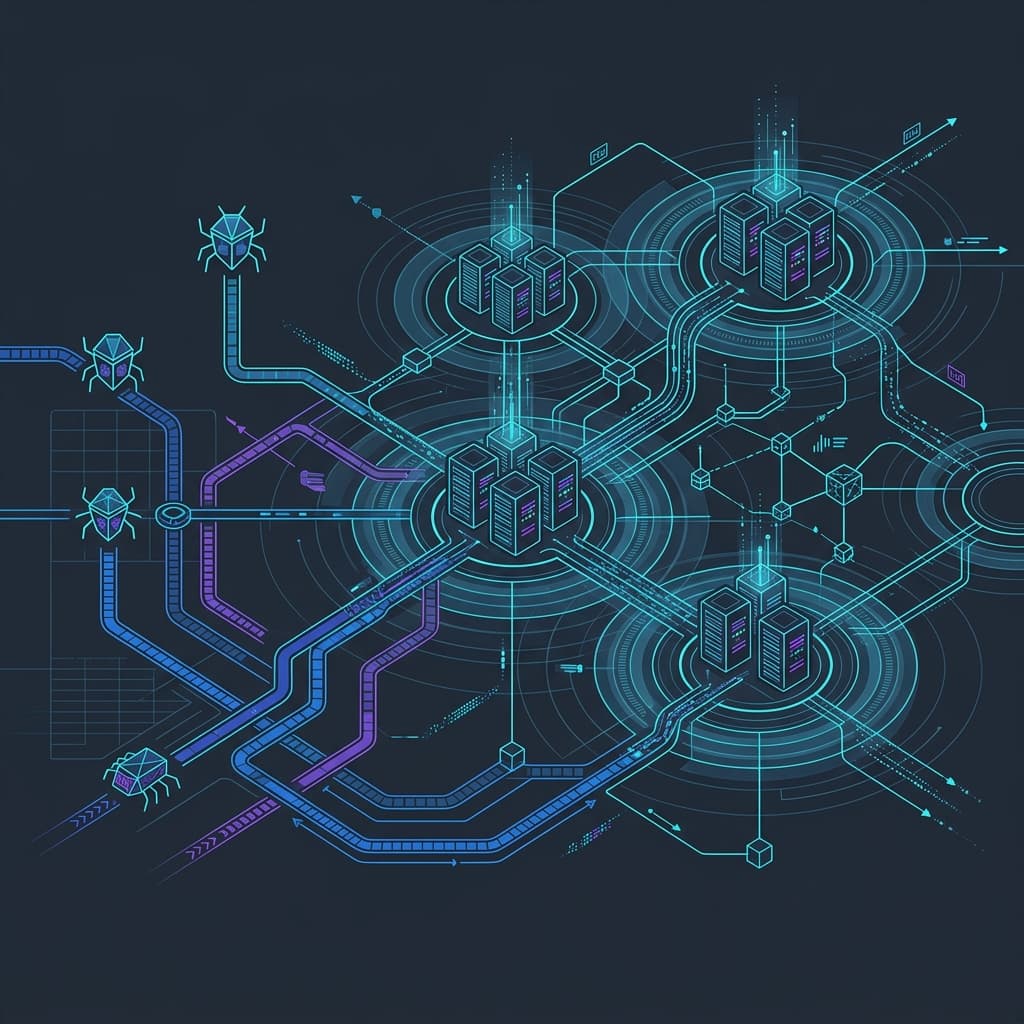
What Is Serponado? The Technical Anatomy of Indexing Volatility
A search engine algorithm collision can destabilise organic rankings. This analysis outlines the mechanics of indexing volatility and B2B mitigation strategies.

In the modern digital economy, search engine visibility functions as the primary conduit for enterprise customer acquisition. However, sophisticated headless website deployments frequently encounter a system-critical indexing collision known as Serponado. This anomaly occurs when parallel search engine pipelines generate conflicting signals, resulting in sudden indexation dropout. For enterprise organisations operating within complex, multi-month B2B procurement cycles, such a dropout poses a severe financial threat. If a key product page or service directory disappears from search results during the evaluation phase, the entire sales pipeline collapses. This volatility erodes brand authority and interrupts decision-making pathways before a lead ever contacts a representative. Maintaining absolute technical consistency across all indexing pipelines is therefore not merely a search engine optimisation goal, but an operational necessity to safeguard enterprise revenue streams and ensure uninterrupted customer journeys.
1. Algorithmic Mechanics of the Serponado Collision
To prevent indexing volatility, one must analyse how modern search engines process web documents. Most crawlers operate on a two-wave indexing model. The first wave relies on a fast HTML parser that reads the server-rendered document immediately. This parser extracts primary text, metadata, and structured data tags. If the HTML is valid, the page is temporarily indexed. The second wave, however, is deferred. The search engine queues the page for the Web Rendering Service (WRS), which runs a headless Chromium browser instance. The WRS executes JavaScript, processes stylesheets, computes layouts, and builds the Document Object Model (DOM).
The Serponado collision occurs when the output of these two waves differs significantly. If the HTML parser reads a complete, content-rich page, but the subsequent WRS rendering process encounters issues, a conflict is registered. For instance, slow API responses may cause the Chromium runner to timeout before content renders. Alternatively, client-side scripts might alter the main headings or remove crucial links. When the search engine compares the initial HTML tree with the final WRS-rendered DOM and finds substantial discrepancies, it cannot determine the true state of the content. This algorithmic confusion causes the indexing systems to alternate between the two versions. The page fluctuates wildly in rankings, appearing and disappearing from search results as different microservices update the index. This behaviour demonstrates that relying on client-side execution for crawler indexing introduces critical vulnerability into any corporate web programme. To guarantee stability, enterprise systems must target absolute synchronisation between the initial HTML response and the final rendered state, ensuring that the WRS crawler never encounters a layout mismatch or missing nodes during its evaluation.
2. Asynchronous Hydration Conflicts and DOM Mismatches
Headless applications built on Next.js or React rely on a process called hydration to make static pages interactive. During hydration, the browser takes the pre-rendered HTML from the server and attaches event listeners to the DOM. However, hydration latency and DOM mismatches present severe challenges for search engines. If the DOM structure generated by the client-side JavaScript differs from the HTML sent by the server, a hydration mismatch occurs. This discrepancy forces the browser to discard the server-rendered elements and rebuild the DOM tree from scratch.
For search engine crawlers, a DOM mismatch is highly problematic. The Chromium WRS attempts to parse the page, but layout shifts caused by delayed hydration alter the positions of text blocks and links. When hydration takes too long or fails entirely due to network latency, the crawler sees an incomplete or broken layout. This mismatch triggers ranking instability. If the crawler records different header tags or missing navigation elements during different visits, the search engine struggles to prioritise the content. The indexing pipeline interprets these shifts as layout instability, reducing the overall trust score of the URL. To prevent these conflicts, B2B platforms must minimise client-side state dependencies. Rendering components dynamically based on client-side factors like viewport width or localStorage will inevitably create hydration discrepancies. Ensuring that the DOM remains isomorphic from the server to the client is critical for avoiding indexing dropouts. By prioritising hydration speed and eliminating layout shifts, organisations protect their web pages from the volatile re-evaluation cycles that occur when crawlers encounter unstable DOM structures. Therefore is structured programming and avoiding dynamic layout modifications within client code imperative to stabilise the crawler pipeline and allow error-free indexing.
3. Edge Cache Drifts and CDN Inconsistencies
In global enterprise architectures, Content Delivery Networks (CDNs) distribute content across geographically dispersed edge nodes. While CDNs decrease latency, they also introduce risks of edge cache drifts and CDN inconsistencies. If the cache invalidation policy is not perfectly synchronised, different edge servers will host different versions of the same page. For search engine crawlers, which initiate requests from diverse geographic locations, this inconsistency is problematic. A crawler query originating from a European node might receive a fresh document, while a query from a North American node receives a stale version.
These cache drifts trigger a Serponado collision. The search engine detects contradictory structural and semantic signals from the same URL within a short timeframe. For instance, the HTML structure, internal links, or JSON-LD metadata might differ between the cached versions. The indexing algorithm cannot determine which version represents the true source of authority. This geographic inconsistency leads to rapid, erratic re-indexing. The URL is repeatedly crawled and re-evaluated, leading to volatile ranking shifts. B2B systems must implement instant, global cache purging mechanisms to prevent these anomalies. By enforcing edge cache synchronisation, organisations ensure that every crawler request receives the identical payload, regardless of geographic origin. This strict policy eliminates the risk of crawler-detected data mismatch, thereby securing a stable index position.
4. Enforcing Isomorphic Server-Side Rendering
Resolving indexing volatility requires implementing isomorphic Server-Side Rendering (SSR). This pattern ensures that the HTML payload generated by the server is structurally identical to the final DOM rendered in the browser. When a crawler fetches a page, it receives a complete, fully populated HTML document immediately. When the WRS executes the client-side JavaScript, the hydration phase performs a clean match without altering any layout element or text node. Since the pre-rendered HTML matches the hydrated state, the search engine's WRS does not detect any discrepancy.
To implement this isomorphic solution, engineers must enforce several architectural rules:
- Payload Matching: Avoid generating content dynamically on the client using browser-only APIs. All critical content, including navigation links, headings, and schema markup, must be present in the initial HTML.
- Edge Cache Purging: Configure CDN headers to invalidate cached pages simultaneously across all locations. Use active revalidation schemas, such as stale-while-revalidate under <50ms response constraints, to maintain fresh payloads.
- Isomorphic Hydration: Use React features like server components to render static layout structures on the server, minimising the JavaScript bundle size and reducing hydration latency.
By adopting these practices, organisations eliminate the state conflicts that trigger Serponado collisions. The search engine receives consistent signals from both the initial crawl and the Chromium rendering engine. This synchronisation establishes a predictable indexing pipeline. It secures stable search positions and protects B2B portals from sudden ranking drops, ensuring that potential clients can access key resources throughout their long procurement journeys. For further support with architectural design, you may read our guide on becoming a digital consultant at myquests.org or reach out directly via our contact page.
5. A Comparative Table: Indexing Discrepancies
To assist technical search engine teams in diagnosing and resolving indexing volatility, the comparison below details how each phase of the search engine's crawling pipeline interacts with modern rendering environments. It outlines the specific triggers for Serponado collisions and provides targeted isomorphic mitigation strategies to ensure stable rankings:
| Indexing Pipeline | Collision Trigger | Isomorphic Mitigation |
|---|---|---|
| HTML Parser Wave | Server-side metadata does not match client rendering. | Ensure identical HTML outputs for all client requests. |
| Chromium WRS Wave | Delayed hydration triggers severe layout shifts. | Prioritise server component usage to reduce hydration latency. |
| Edge CDN Nodes | Geographically drifted caches serve stale HTML payloads. | Implement instant cache invalidations across global edge locations. |
6. Conclusion
In summary, managing indexing stability within headless enterprise architectures requires treating search visibility as a technical performance metric. By systematically eliminating client-side rendering anomalies, organisations resolve the root causes of indexing volatility. Enforcing isomorphic server-side rendering, synchronising CDN edge caches, and prioritising hydration performance ensures that crawler pipelines receive a consistent and predictable data state. This technical alignment removes the algorithmic conflicts that lead to sudden indexing dropouts, thereby securing stable organic rankings and preserving brand authority across competitive B2B search landscapes.